Functional Rehab Academy
Flexor carpi ulnaris / radialis
Muscle origin
Medial epicondyle of humerus (both), olecranon and posterior border of ulna (Flexor carpi ulnaris)
Muscle insertion
Bases of metacarpal bones 2-3 (Flexor carpi radialis) and Pisiform bone, hamate bone, base of metacarpal bone 5 (Flexor carpi ulnaris)
Muscle function
Wrist flexion, wrist abduction (Flexor carpi radialis) and wrist adduction (Flexor carpi ulnaris). Control of elbow and upper and lower Radioulnar joints.
Nerve innervation
C6-T1 (Lovett reactor T10-T12)
Primary muscle type
Phasic / Mixed type (50-60%)
Myofascial lines
Primary inhibatory muscles
Related joints
- Radioulnar joint
- Wrist joint
Flexor carpi ulnaris
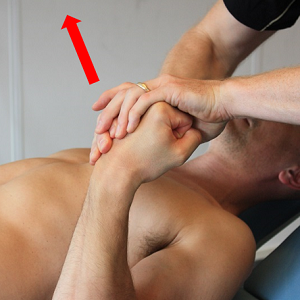
Client is supine with the elbow flexed in a 90 deg. angle, hand clenched into a fist and wrist in full flexion. Grab around the fist close to the wrist area and apply pressure towards wrist extension in a slight oblique angle away from the Ulnar bone towards the radial head.
Flexor carpi radialis
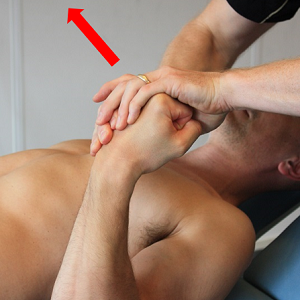
Client is supine with the elbow flexed in a 90 deg. angle, hand clenched into a fist and wrist in full flexion. Grab around the fist close to the wrist area and apply pressure towards wrist extension in a slight oblique angle away from the Radial bone towards the ulnar head.
Functional anatomy for
Flexor carpi ulnaris / radialis
Organ relationship (T1-L2, Sacrum, n. Vagus)
- Thyroid (AK)
- Symp – T1-4 (Thyroid Plexus)
- Parasymp – CX (Vagus)
- Heart (FA)
- Symp – T1-6 (Cardiac plexus)
- Parasymp – CX (Vagus)
- Esophagus (AK)
- Symp – T4-T9 (Esophageal plexus)
- Parasymp – CX (Vagus)
- Gallbladder (AK)
- Symp – T5-T9 (Celiac plexus)
- Parasymp – CX (Vagus)
- Small intestine (AK)
- Symp – T5-12 (Celiac and superior Mesenteric plexus)
- Parasymp – CX (Vagus)
- Adrenals (AK)
- Symp – T8-L1 (Celiac and Renal plexus)
- Parasymp – None
- Reproductive organs (AK)
- Symp – T10-L2 (Inferior Hypogastric, Ovarian and Testicular plexus)
- Parasymp – S2-4 (Sacral plexus)
Associated muscles
- Pectoralis major – Superficial front arm line
- Latissimus dorsi – Superficial front arm line
- Palmaris longus – Wrist flexion
- Flexor pollicis longus – Wrist flexion
- Finger flexors – Wrist flexion
- Supinator – Control of Elbow and Radioulnar joints
- Anconeus – Control of Elbow joint
- Pronator teres – Control of Radioulnar joints
- Pronator quadratus – Control of Radioulnar joints