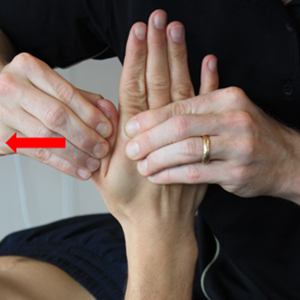
Muscle origin: Transverse head: Palmar base of 2-3rd metacarpal bone and capitate bone
Muscle insertion: Medial base of 1st proximal phalanx via ulnar sesamoid bone
Muscle function: Adduction of thumb and control of wrist
Nerve innervation: C8-T1 (Lovett reactor T9-10)
Myofascial lines
Primary inhibatory muscles
Related joints
Thumb is placed in full adduction aligning close to the index finger. Stabilize the 2-5th metacarpal bone with one hand, and the try to pull the 1. metacarpal bone in a straight line away from the index finger.
Functional anatomy for
Adductor pollicis
Organ relationship: Symp T1-L2 / Parasymp CX (Vagus), S2-4
Heart (FA/AK)
Symp – T1-6 (Cardiac plexus)
Parasymp – CX (Vagus)
Stomach (AK)
Symp – T5-9 (Celiac plexus)
Parasymp – CX (Vagus)
Small intestine (AK)
Symp – T5-12 (Celiac and superior Mesenteric plexus)
Ready to Master the JLGO Method and Get Dramatically Better Patient Outcomes?
Join the waitlist and secure exclusive early access to the online master course!
The JLGO method helps skilled therapists locate the root cause of pain in just a few steps — they learn how to create spontaneous and noticeable change with their clients in each session and how to achieve their rehab goals faster than ever before.
Imagine having the complete system: all the video demonstrations, proven protocols, expert support, and community — so you can deliver life-changing results and build the thriving practice you deserve.
Spots are strictly limited — priority access is given to those who join the waitlist today!